

Kibard means keyboard. It is usually a spelling mistake made when someone wants to search for keyboard but types the word quickly or hears it differently. The correct word is keyboard, and it refers to the input device used to type letters, numbers, symbols, and commands on computers, laptops, tablets, phones, and smart devices.
A keyboard looks simple, yet it controls a major part of digital work. Students use it for assignments. Office users depend on it for emails, reports, and data entry. Gamers use it for control and speed. Writers, developers, editors, and designers also rely on keyboards for focused work. So, when someone searches for kibard, the real intent is usually clear. They want to understand what a keyboard is, how it works, what type to buy, or how to fix a typing problem.
Kibard Meaning Quick Answer
Kibard is an incorrect spelling of keyboard. It refers to the same device used to type text and send commands to a computer or digital system.
Correct word: Keyboard
Wrong spelling: Kibard
Main meaning: Input device for typing and control
Common use: Computers, laptops, phones, tablets, gaming setups, office desks
What Is a Keyboard?
A keyboard is an input device that allows a user to enter text, numbers, symbols, shortcuts, and commands into a digital system. Each key sends a signal to the device. The system reads that signal and shows the result on the screen. Keyboard keys are arranged in sections. Letter keys help with writing. Number keys help with calculations and data entry.
Function keys perform quick actions. Control keys help with shortcuts. Arrow keys support movement across documents, menus, and pages. A keyboard can be built into a laptop or connected as an external device. External models can connect through USB, Bluetooth, or wireless receivers. On phones and tablets, a virtual keyboard appears on the screen.
Is Kibard an Official Word?
Kibard is not an official English word for a typing device. It is better understood as a spelling error for the keyboard. Search engines can still connect this term with keyboard-related results because the spelling sounds close. This kind of mistake happens with fast typing, mobile typing, weak auto-correct, or pronunciation-based typing. A user may type “kibard” but expect keyboard information. That makes the keyword useful for a clear correction-style article.
Better wording for the article is simple:
- Kibard is a misspelling of keyboard. The correct term is keyboard.
- This keeps the answer direct and avoids confusion.
Keyboard History in Simple Words
Keyboard history starts with typewriters. Early typewriters used physical keys to print letters on paper. Each key moved a metal arm that struck an ink ribbon and placed a character on the page. The QWERTY layout became the familiar keyboard pattern. It takes its name from the first six letters on the top letter row: Q, W, E, R, T, and Y. This layout became linked with early typewriters and later moved into computer keyboards.
Computer keyboards changed the process. Instead of printing letters on paper, they sent electronic signals to a machine. Over time, keyboards became smaller, faster, cheaper, lighter, and easier to connect with different devices. Today, keyboards come in several forms. Some are physical, some are virtual, some are made for speed, and some are designed for comfort. A few models also support accessibility needs. Some are designed for accessibility and special needs.
How a Keyboard Works
A keyboard works through signals. When a key is pressed, the keyboard detects that action and sends a code to the computer or device. The system then converts that code into a letter, number, symbol, or command. For example, pressing the A key sends a signal for the letter A. Pressing Enter sends a command to move forward, submit, open, or confirm something, depending on the app.
Wireless keyboards use the same basic process, but they send signals through Bluetooth or a small USB receiver. Wired keyboards send signals through a cable. Laptop keyboards send input through internal hardware. This process happens very fast. That is the reason typing feels instant on a healthy keyboard and responsive device.
Main Parts of a Keyboard
| Keyboard Part | Main Function |
|---|---|
| Alphabet keys | Type letters and words |
| Number keys | Enter numbers and basic symbols |
| Function keys | Perform quick system or app actions |
| Control keys | Use shortcuts and commands |
| Arrow keys | Move cursor or selection |
| Numeric keypad | Enter numbers faster |
| Special keys | Control sound, brightness, search, print screen, and other actions |
A full-size keyboard usually includes all of these parts. Smaller keyboards may remove the number pad, extra spacing, or some control keys to save desk space.
Common Keyboard Types
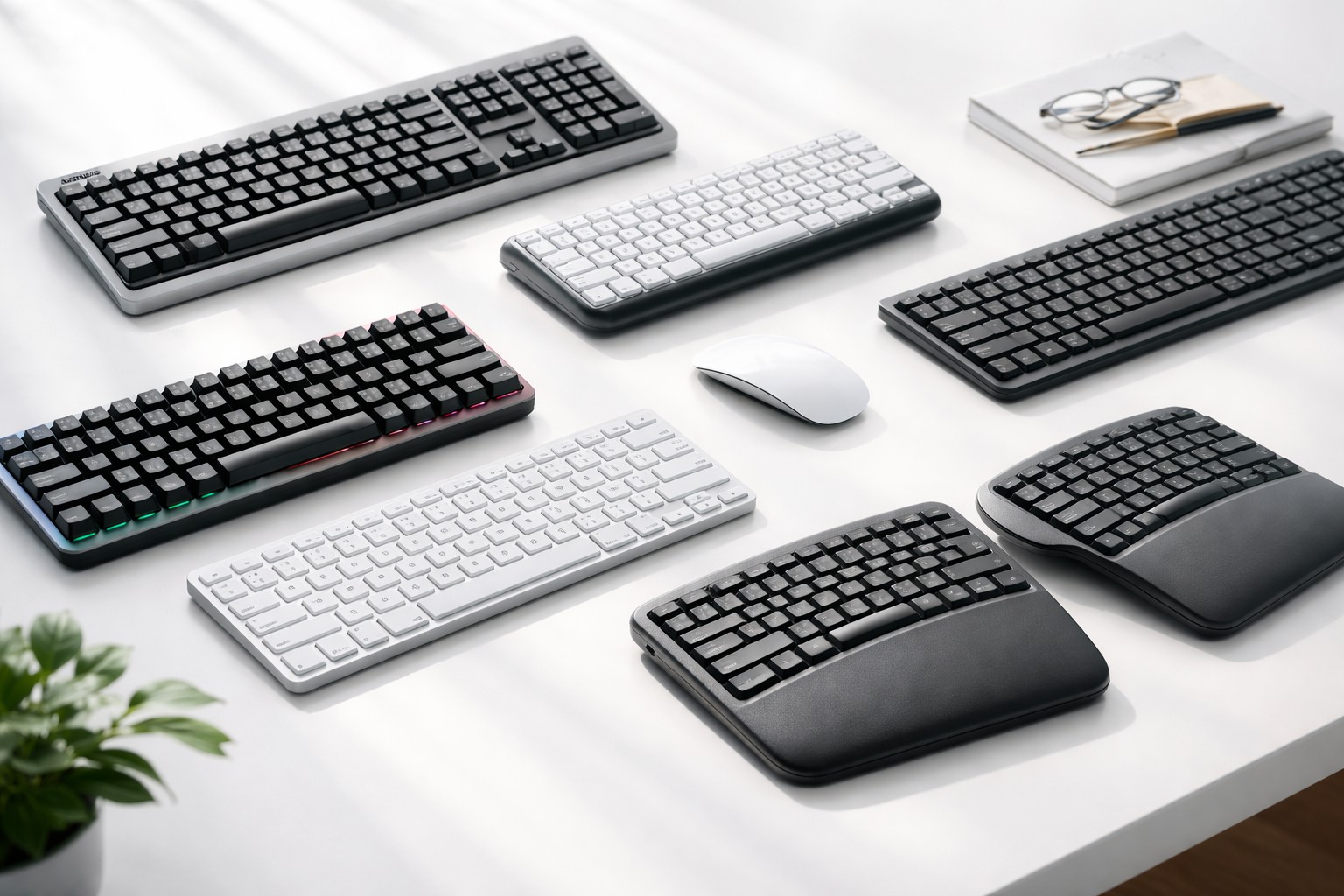
| Keyboard Type | Best For | Main Benefit |
| Standard keyboard | Daily computer use | Balanced layout |
| Mechanical keyboard | Gaming, writing, long typing | Strong feedback |
| Membrane keyboard | Office and home use | Quiet and affordable |
| Wireless keyboard | Clean desk setup | Cable-free use |
| Compact keyboard | Travel and small desks | Saves space |
| Ergonomic keyboard | Long work sessions | Better hand comfort |
| Gaming keyboard | Competitive play | Fast response and extra controls |
| Virtual keyboard | Phones and tablets | No physical device needed |
Each keyboard type serves a different need. A student may prefer a simple wireless keyboard. A gamer may need fast response and durable keys. A writer may care about key feel and comfort. An office user may choose a quiet keyboard to avoid noise.
Mechanical vs Membrane vs Standard Keyboard
| Feature | Mechanical Keyboard | Membrane Keyboard | Standard Keyboard |
| Typing feel | Strong and clear | Soft and light | Balanced |
| Noise | Usually louder | Usually quieter | Medium |
| Price | Higher | Lower | Medium |
| Durability | Strong | Average | Depends on the model |
| Best use | Gaming, writing, heavy typing | Office, study, daily work | General use |
Mechanical keyboards use individual switches under the keys. That gives better feedback and durability. That makes them quieter and cheaper. Standard keyboards can fall into either category, depending on the model. The right choice depends on comfort, budget, noise level, and use case.
Keyboard Layouts
QWERTY is the standard layout in English-speaking regions, but it is not the only layout. Other layouts also exist for different languages and typing styles. Common layouts include:
QWERTY
AZERTY
QWERTZ
Dvorak
Colemak
A layout affects where letters and symbols appear. This becomes important when buying a laptop, external keyboard, or replacement keyboard from another country. Wrong layout settings can also create typing errors. For example, pressing one key may show a different symbol if the language setting does not match the physical keyboard.
Common Keyboard Problems
Keyboard issues can appear suddenly. Some problems come from dust. Some come from settings. And some come from damaged hardware. Common problems include:
- Keys not working
- Wrong letters appearing
- Keyboard typing double letters
- Slow key response
- Spacebar not working
- Number pad not typing numbers
- Laptop keyboard locked
- Wireless keyboard not connecting
- Sticky keys are turning on by mistake
Quick Keyboard Fixes
- Restart the device
- Clean between the keys
- Check the USB port
- Reconnect Bluetooth
- Replace wireless keyboard batteries
- Check language settings
- Turn off Sticky Keys or Filter Keys
- Update keyboard drivers
- Test the keyboard on another device
- Try an external keyboard on a laptop
Wrong language settings can make the keyboard type unusual symbols. Sticky Keys and Filter Keys can also change how typing behaves. On Windows, keyboard accessibility settings can affect key response, shortcuts, and repeated keystrokes. On Mac, keyboard settings and accessibility options can also change typing behavior.
Keyboard Buying Guide
A good keyboard should match the user’s daily routine. Price alone should not decide the choice. Comfort, size, key feel, connection type, and noise level also matter. Before buying, check these points:
- Purpose
- Typing comfort
- Keyboard size
- Wired or wireless setup
- Noise level
- Build quality
- Battery life
- Device compatibility
- Shortcut keys
- Return policy
For office use, a quiet and comfortable keyboard is usually better. For gaming, response time and durability matter. And for travel, compact size helps. For long typing sessions, ergonomic support can reduce strain.
Buying Mistakes to Avoid
A wrong keyboard can slow down work and create discomfort. These mistakes are common during purchase:
- Choosing only by price
- Ignoring hand comfort
- Buying the wrong layout
- Forgetting device compatibility
- Choosing a loud keyboard for shared spaces
- Ignoring desk size
- Skipping battery details for wireless models
- Buying a gaming keyboard for basic office work
- Buying a tiny keyboard for long writing sessions
A keyboard should feel natural after a short adjustment period. Hard keys, cramped layout, or weak connection can turn daily typing into a frustrating task.
Keyboard for Students, Office, Gaming and Writers
| User Type | Best Keyboard Choice | Main Need |
|---|---|---|
| Students | Quiet wireless or full-size keyboard | Assignments and online classes |
| Office users | Quiet full-size keyboard | Reports, emails, spreadsheets |
| Gamers | Mechanical gaming keyboard | Speed and control |
| Writers | Comfortable mechanical or ergonomic keyboard | Long typing sessions |
| Travelers | Compact wireless keyboard | Portability |
Accessible Keyboards
Accessible keyboards help users who need extra support with typing. These can include large-key keyboards, one-hand keyboards, on-screen keyboards, switch-access keyboards, keyguards, and adjustable keyboard settings. Large keys can help users with limited fine motor control. On-screen keyboards can help users who cannot use a standard physical keyboard.
Sticky Keys can help when pressing multiple keys together is difficult. Filter Keys can reduce problems from accidental or repeated keystrokes. For cerebral palsy, motor challenges, tremors, or hand weakness, an adaptive keyboard may offer better control. A therapist, accessibility specialist, or assistive technology provider can help choose the right setup.
Keyboard vs Touchscreen
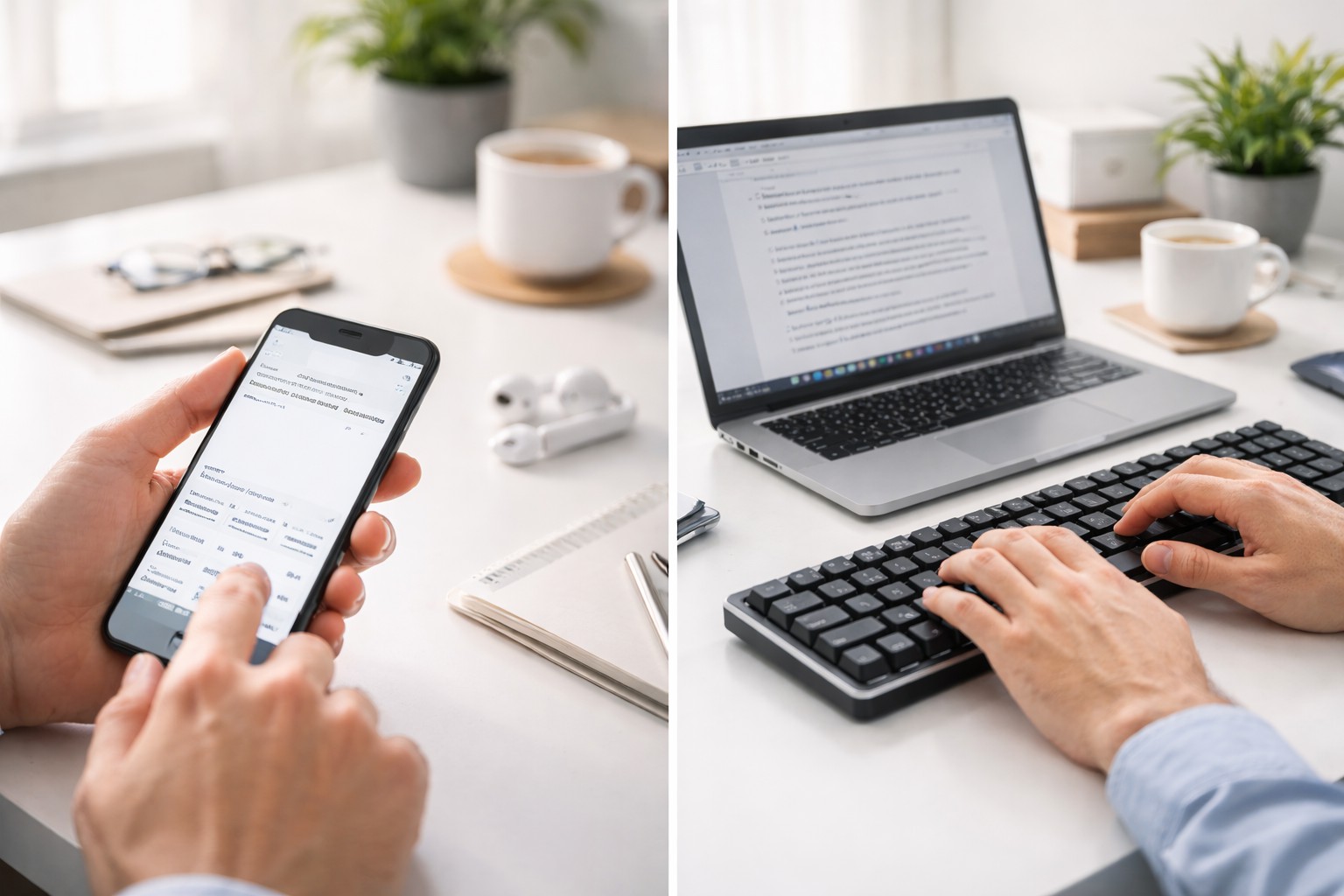
Touchscreens are useful for short messages, scrolling, quick searches, and mobile tasks. They are easy to carry and need no extra hardware. Keyboards are better for long writing, coding, data entry, editing, gaming, and document work. Physical keys give stronger control and better accuracy during extended tasks. Voice typing can help in some situations, but it does not replace keyboard control for every task. Editing, formatting, passwords, shortcuts, and professional work still feel easier with a keyboard.
Function Keys F1 to F12
Function keys sit at the top of several keyboards. Their use can change based on the device, operating system, and app. Common uses include:
- F1: Help
- F2: Rename
- F3: Search
- F4: Address bar or app command
- F5: Refresh
- F6: Move between screen areas
- F7: Spell check in some apps
- F8: Startup or selection function in some systems
- F9: App-specific command
- F10: Menu activation in some apps
- F11: Full-screen mode
- F12: Save As, developer tools, or app-specific action
On laptops, function keys may also control brightness, volume, airplane mode, keyboard light, and media playback.
Typing Speed Tips
Typing speed improves with practice and better habits. Accuracy should come before speed. Fast typing with constant errors wastes time. Useful tips include:
- Use proper finger position
- Keep wrists relaxed
- Look at the screen instead of the keys
- Practice short typing drills
- Learn common shortcuts
- Use a comfortable chair and desk height
- Avoid pressing keys too hard
- Take short breaks during long sessions
A better keyboard can help, but skill still matters. Daily practice builds speed over time.
Keyboard Shortcuts That Save Time
Shortcuts reduce extra clicks. They are useful for work, study, writing, and browsing. Common Windows shortcuts:
- Ctrl + C: Copy
- Ctrl + V: Paste
- Ctrl + X: Cut
- Ctrl + Z: Undo
- Ctrl + A: Select all
- Ctrl + F: Search
- Alt + Tab: Switch apps
- Windows + D: Show desktop
- Windows + L: Lock screen
Common Mac shortcuts:
- Command + C: Copy
- Command + V: Paste
- Command + X: Cut
- Command + Z: Undo
- Command + A: Select all
- Command + F: Search
- Command + Tab: Switch apps
- Command + Space: Search with Spotlight
Learning a few shortcuts can improve speed without changing hardware.
Keyboard Care Tips
A keyboard lasts longer with basic care. Dust, crumbs, liquid, and rough use can damage keys. Helpful care steps include:
- Keep food and drinks away
- Clean the surface regularly
- Use compressed air carefully
- Remove dust from key gaps
- Avoid harsh liquid cleaners
- Store wireless keyboards safely
- Replace weak batteries on time
- Keep laptop keyboards covered during travel
For laptops, liquid damage can be serious because the keyboard sits above internal parts. Quick action matters after a spill. Power off the device and get professional help when needed.
Keyboard in 2026
Keyboards still matter in 2026 because digital work still needs accurate input. AI tools, voice typing, touchscreens, and gesture controls are useful, but keyboard control remains strong for writing, coding, gaming, editing, and professional tasks.
Newer keyboards now focus on better switches, compact layouts, wireless stability, custom keys, quieter typing, and ergonomic comfort. Some models also support multiple devices, so one keyboard can switch between a laptop, tablet, and phone. The future may bring smarter typing tools, but the core idea remains simple. Press a key, send a command, and control the screen.
Final Thoughts
A keyboard remains one of the easiest ways to control a digital device with speed and accuracy. From school tasks and office work to gaming, writing, coding, and browsing, it supports almost every kind of online activity. The right keyboard can make daily use smoother, especially when it matches the user’s typing style, workspace, and comfort needs.
Simple care, correct settings, and basic troubleshooting can also prevent common typing problems. For anyone who typed kibard, the main takeaway is clear: the search points toward keyboard information, keyboard types, common issues, and smart buying choices.
Common FAQs
What does kibard mean?
Kibard is an incorrect spelling of keyboard. A person may type it by mistake when looking for keyboard meaning, keyboard types, or keyboard problems online.
What is the correct spelling of kibard?
The correct spelling is keyboard. Kibard is not the standard word, but search engines usually understand it as keyboard because both words sound close.
What is a keyboard used for?
A keyboard is used to type text, enter numbers, use shortcuts, control apps, play games, and send commands to a computer, laptop, tablet, or phone.
What are the main keys on a keyboard?
Main keyboard keys include letter keys, number keys, function keys, arrow keys, control keys, spacebar, Enter, Backspace, Shift, Ctrl, and Alt. Full-size keyboards may also include a numeric keypad.
Why is my keyboard typing wrong letters?
Wrong letters usually appear because of an incorrect language layout, stuck keys, software settings, or driver issues. Checking the keyboard layout is the first useful step.
What should I do if some keyboard keys stop working?
Start by restarting the device and cleaning around the affected keys. If the issue continues, test another keyboard or check whether the problem comes from hardware damage.
What is the difference between mechanical and membrane keyboards?
Mechanical keyboards use separate switches under each key, so they feel stronger and more responsive. Membrane keyboards use a soft pressure layer, which makes them quieter and usually cheaper.
What does a 96 percent keyboard mean?
A 96 percent keyboard keeps nearly all important keys but removes extra empty space. It saves desk space while still keeping the number pad.
Related Post: Petir108win.online Review Safety Risks Domain Facts and Trust Check