

An artistic clown is a creative performer who uses comedy, movement, emotion, costume, and visual art to entertain an audience. This type of clown may appear in a circus, theatre, festival, hospital, street show, or private event. Each act has its own character and purpose. A performer can create laughter without large shoes, a bright wig, or heavy face paint.
Clown art requires far more than a funny costume. A skilled performer must understand timing, body language, audience mood, and character work. Music, mime, magic, dance, puppets, or simple props may also become part of the act. This guide explains the meaning, history, styles, skills, training, work options, and safety rules linked to artistic clowns.
Table of Contents
ToggleWhat Is an Artistic Clown?
An artistic clown is a performer who turns simple actions, mistakes, and emotions into entertainment. The phrase does not describe one official clown type. It serves as a broad name for a clown who treats each part of the act as a creative choice. Makeup, clothes, posture, voice, and props all help shape the final character.
A traditional party clown may focus on games, balloons, and short jokes. An artistic performer often adds theatre, mime, music, dance, or a clear story. Their act may feel funny, sad, strange, gentle, or even poetic. Laughter remains important, but the character can also show fear, hope, pride, loneliness, or surprise.
Good clown art does not depend on random noise. Every movement needs a reason. A hat may fall at the right moment, or a chair may become part of a comic struggle. Simple objects can take on new roles through imagination. Such details help the audience enter the clown’s world.
History and Main Styles of Clown Art
Comic characters appeared in old theatres, festivals, royal courts, and local traditions across several cultures. Court jesters used jokes and satire to speak about serious matters. Italian commedia dell’arte later gave performers bold characters, masks, physical comedy, and clear social roles. Circus clowns became common in the late eighteenth century and developed a stronger focus on comedy during the nineteenth century.
Joseph Grimaldi became a major figure in English clown history. His stage character used white face paint, colorful clothes, physical jokes, and sharp social comments. His influence became so strong that performers later used the word Joey as another name for a clown. Modern artists still borrow ideas from circus, mime, theatre, and silent film. Cirque du Soleil’s history of clowning gives further details about this development. Several clown styles now appear in live entertainment. A performer may follow one style or combine several forms.
| Clown style | Main features | Common type of act |
|---|---|---|
| Whiteface | Neat makeup, clear control, and a strong stage presence | Theatre, circus, and group comedy |
| Auguste | Bright clothes, large features, and playful mistakes | Slapstick and physical jokes |
| Character clown | A comic version of a familiar person or job | Satire and short stories |
| Mime clown | Little or no speech with clear body movement | Silent theatre and street shows |
| Contemporary clown | Personal style, simple costume, and emotional stories | Modern circus and stage art |
No rule requires an artistic clown to fit one of these groups. A quiet character may wear only a red nose and plain clothes. Another performer may use detailed makeup and a large costume. Originality comes from the connection between the character, the act, and the audience.
Character, Costume, Makeup, and Essential Skills
A strong clown character starts with a clear personality. The performer may act proud but fail at simple tasks. Another character may feel shy yet show great courage at the right moment. Small details such as the walk, voice, facial expression, and reaction to failure make the role believable. A useful character also has goals, fears, habits, and weaknesses.
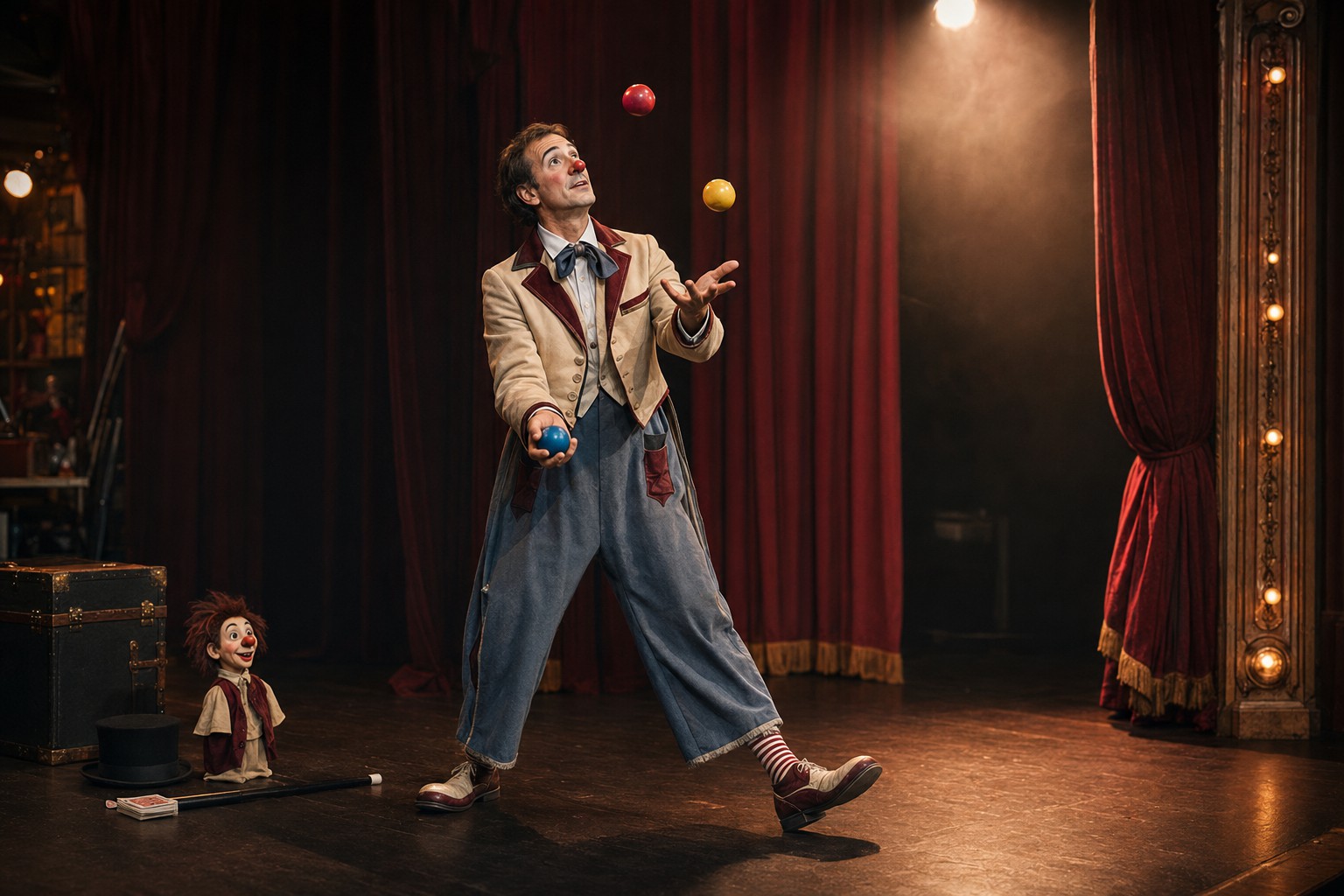
Costume and makeup should support that personality. Oversized trousers can suit a clumsy figure, but a neat jacket may work better for a strict whiteface clown. Face paint must allow the audience to see each expression. Heavy makeup is not always necessary. Modern theatre clowns often use light makeup so natural emotions remain visible.
Useful performance skills include:
- Physical comedy and safe falls
- Mime and clear body language
- Comic timing and audience awareness
- Improvisation and quick reactions
- Basic acting and emotional control
- Magic, music, juggling, or puppetry
- Prop care and costume maintenance
A performer does not need to master every skill at once. Strong acts often rely on one simple talent used in an original way. Cirque du Soleil looks for physical precision, emotional expression, rhythm, stage presence, and strong improvisation in clown performers. Those requirements show how much craft sits behind a polished comic act. Cirque du Soleil casting guidance also lists theatre, mime, and physical theatre as useful forms of training.
How Does an Artistic Clown Create an Act?
A clown act usually starts with a simple problem. The character may want to sit on a chair, play a musical note, open a box, or impress another person. A small obstacle then turns that easy task into a comic struggle. Each new attempt makes the problem larger, but the audience must still understand the goal.
Timing controls the effect of every joke. A pause gives the crowd time to notice a mistake. Eye contact tells the audience that the clown has also seen the problem. A fast reaction can create surprise, but a slow response may produce stronger laughter. Rehearsal helps the performer find the right pace without making the act feel stiff.
Live response also shapes the show. Children may laugh at a clear fall, but adults may enjoy a quiet look or a clever social joke. A professional notices those reactions and adjusts the pace. Respect remains essential. A clown should invite participation instead of forcing a person into an uncomfortable moment.
Places Where Artistic Clowns Perform
Circuses and theatres remain important places for clown art. Large productions may combine comedy with music, dance, acrobatics, lights, and detailed stage design. Small theatre shows often focus on one character and a simple story. Street festivals give artists direct contact with crowds but also demand strong control of space and noise.
Private events offer another route. Clowns can work at family celebrations, schools, cultural programs, fairs, business events, and community shows. Each place needs a different act. A school program may use humor to teach safety or kindness, whereas a festival act may focus on visual comedy that works across language barriers.
Healthcare clown work has a different purpose and requires special preparation. Medical clowns use gentle humor, music, magic, and play to reduce fear in care settings. They must follow hospital rules and respect the needs of patients, families, and staff. The Smithsonian Medical Clown Project profile notes that trained medical clowns work in patient rooms, waiting areas, emergency units, and other hospital spaces.
How to Become an Artistic Clown
New performers should study acting, mime, improvisation, dance, or physical theatre. Local drama groups and circus schools can provide useful practice. Workshops also help a student understand character design, comic rhythm, safe movement, makeup, and props. Regular practice matters more than an expensive costume. A simple path can help a beginner develop an original act:
- Choose a basic personality and one clear weakness.
- Create a comfortable costume that matches the role.
- Build a short act around one easy problem.
- Record each practice session and review the result.
- Test the act before a small and trusted audience.
- Remove weak jokes and improve the strongest moments.
- Prepare a short video portfolio for event planners or casting teams.
A beginner should keep the first routine short. Three clear minutes can show more skill than a long act with no direction. Clean movement, a visible goal, and a strong final moment give the routine a complete shape. Feedback from actors, directors, and other clowns can reveal problems that the performer may not notice alone. Career growth takes patience. Paid work may come from theatres, festivals, schools, circuses, care programs, or event companies. Social media can help an artist share short clips, but live experience remains vital. A clear portfolio should show the character, best routine, special skills, and type of audience the act suits.
Safety, Consent, and Professional Conduct
Physical comedy must look risky without placing anyone in real danger. Props need regular checks, and shoes must allow safe movement. Falls require practice on suitable surfaces. Fire, sharp objects, unsafe stunts, and harmful tricks have no place in an unprepared act. Audience consent also matters. Not every child or adult feels comfortable near a clown. A performer should keep a respectful distance and notice signs of fear. Medical and caring clowns should ask permission before entering personal space. Fragrance-free makeup and clean costumes can also help in sensitive care settings.
Professional groups place great value on respectful conduct. The World Clown Association advises caring clowns to follow facility rules, protect personal space, and act with care. Its competition rules also reject unsafe flames, offensive props, and the use of intoxicants during a performance. These standards protect the audience, performer, and reputation of the art.
Conclusion
Artistic clown work combines comedy, emotion, movement, and visual design. A good performer does more than wear a costume or tell jokes. Each action helps build a character and supports a clear comic idea. Clown art can entertain a large circus crowd, connect with a small theatre audience, or offer a gentle moment inside a hospital.
Its form changes with the setting, but human connection remains at its center. Skill grows through study, practice, feedback, and respect for the audience. A simple character with honest reactions can become more memorable than an expensive outfit. That personal point of view gives every artistic clown a unique place in performance art.
Common Questions About Artistic Clowns
Is an artistic clown the same as a circus clown?
Not always. A circus clown is one form of artistic performer, but clown art also appears in theatre, hospitals, festivals, schools, and street shows. Modern artists may use very little makeup and may focus on character, mime, music, or emotional stories.
Does an artistic clown need to wear face paint?
Face paint is optional. Traditional whiteface and Auguste clowns often use clear makeup designs. Contemporary theatre performers may use a red nose with natural skin, and mime artists may choose a simpler look. Each design should help the audience understand the character.
Can someone become a clown without circus training?
Yes, Acting classes, mime lessons, comedy workshops, and local theatre work can provide a useful start. Circus training becomes important when an act includes acrobatics, juggling, balance work, or other physical skills that need expert support.
Is an artistic clown the same as Art the Clown?
No, Art the Clown is a fictional horror villain from the Terrifier film series. An artistic clown is a real type of creative performer who uses clown skills as an art form. The similar names can cause confusion, but the two subjects have no direct connection.
See More Trend: