

Ed Gein was an American murderer and grave robber from rural Wisconsin. Police arrested him in 1957 after they found the body of hardware store owner Bernice Worden on his farm. Investigators also found human remains that he had taken from local cemeteries. He admitted that he killed Worden and tavern owner Mary Hogan. A court later found that he killed Worden, but it also ruled that he was legally insane at the time of the crime.
His full name was Edward Theodore Gein. He became known as the Butcher of Plainfield and the Plainfield Ghoul. His case shocked the public because he used parts of dead bodies to make masks, clothes, and household objects. These acts later inspired parts of Psycho, The Texas Chain Saw Massacre, and The Silence of the Lambs. Films and television shows have added fiction to his story, so a clear biography must separate court-supported facts from rumor.
Ed Gein Quick Facts
Full Name
Edward Theodore Gein
Born
August 27, 1906, Wisconsin, USA
Died
July 26, 1984, aged 77
Known For
American murderer and grave robber linked to two murders
Arrested
November 16, 1957
Legal Outcome
Convicted of Bernice Worden’s murder but found legally insane at the time
Early Life on a Wisconsin Farm
Edward Theodore Gein was born on August 27, 1906, in La Crosse County, Wisconsin. His parents were George and Augusta Gein. He had one older brother, Henry. The family ran a grocery business for a time before it moved to a farm outside Plainfield in 1914. That remote property became Ed’s home for most of his free life.
George struggled with alcohol and had trouble keeping steady work. Augusta held strict religious views and controlled the home. She taught her sons that alcohol, sex, and close contact with women led to sin. She also tried to keep the boys away from other people. This isolated home life shaped Ed’s childhood, but it cannot excuse or fully explain the crimes he later chose to commit. At school, Ed was shy and had few close friends. Accounts from former classmates describe odd laughter and poor social skills, yet he could read well and did not often cause trouble. He left school after the eighth grade and worked on the family farm. As an adult, he also earned money through farm labor, repair jobs, and other small tasks for neighbors.
Family Deaths and Life Alone
Ed’s father died in 1940. Four years later, Henry died during a brush fire on the family land. Later writers have raised questions about Henry’s death because Ed found the body and reports mentioned possible head injuries. No court found that Ed killed Henry, and no reliable evidence now proves that claim. Augusta suffered serious health problems after Henry’s death. Ed cared for her until she died on December 29, 1945. Her death left him alone on the farm. He sealed several rooms that she had used and kept them largely unchanged. The rest of the house slowly fell into poor condition as his private life became more detached from the community.
Neighbors still hired him for simple jobs, and local families sometimes trusted him around their children. Most people saw him as strange but quiet. He never married and had no known children. They had no idea what he did in private. His strong attachment to his mother remained central to his thoughts, and later reports linked that attachment to the women whose graves he chose.
Grave Robberies and Human Remains
Gein began to visit cemeteries after his mother’s death, most likely around 1947. He later said that he looked for the fresh graves of middle-aged women who reminded him of Augusta. He opened graves at night and took bodies or selected remains back to his farm. This continued for several years without detection.
He admitted robbing nine graves and taking bodies or selected remains from them. Investigators checked several burial sites that he identified and found details that supported his account. This point matters because most of the remains in his house came from graves, not from a large number of murder victims. Reports that call every set of remains a separate victim give a false picture of the case. At the farmhouse, Gein used skin and bones to create masks, pieces of clothing, containers, and covers for household objects. He said he wanted to create a “woman suit” that would make him resemble his mother. The evidence was deeply disturbing, but there is no solid proof that he ate human flesh. He also denied sexual contact with the corpses.
Murders of Mary Hogan and Bernice Worden
Mary Hogan ran a tavern near Plainfield. She disappeared on December 8, 1954, and police found blood at the tavern. Gein had visited the business and later made strange comments about Hogan’s location. After his 1957 arrest, investigators found her remains at his home. He admitted that he had shot her, although the state never brought him to trial for her death. Bernice Worden, 58, owned a hardware store in Plainfield. She disappeared on November 16, 1957. Her son, Frank Worden, served as a deputy sheriff. He found blood in the store and noticed that the final sales receipt named Gein as the buyer of antifreeze. Gein had also told Bernice that he planned to return that morning.
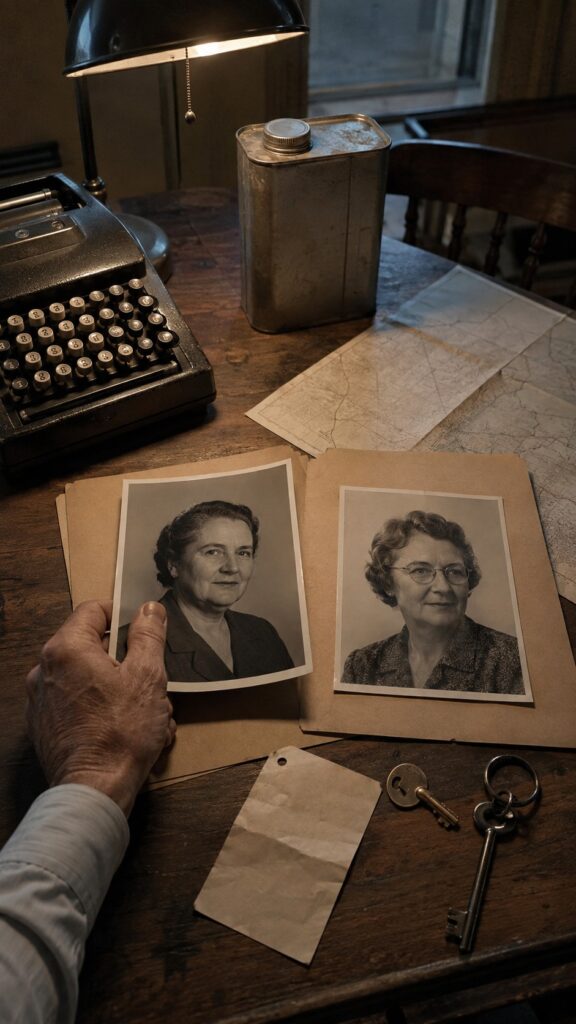
Police arrested Gein later that day and searched his farm. They found Bernice’s body in an outbuilding and determined that she had died from a gunshot. Evidence in the house also connected him to Hogan and the cemetery thefts. These two women are the only murder victims reliably linked to him. Claims that he killed several other people remain unproven.
Arrest and the Farmhouse Investigation
Officers took Gein into custody on November 16, 1957. The last receipt from Worden’s store gave them a direct lead, and the search of his property confirmed their fears. State investigators documented the scene and moved key evidence to the Wisconsin crime laboratory. Historical photographs still show Gein under police guard at that laboratory.
News of the case spread across the United States within days. Early reports often mixed confirmed evidence with rumor, which helped create the larger legend around him. Police at first wondered if the many remains meant that he had killed numerous women. Cemetery checks and his statements showed that grave robbery explained most of them. Questioners obtained admissions from Gein, but his mental condition soon became a major legal issue. Authorities charged him with the first-degree murder of Bernice Worden. The state focused on that case because it had strong physical evidence. Mary Hogan’s death remained part of the official account even though prosecutors did not hold a separate murder trial for it.
Mental Illness, Trial, and Hospital Years
Doctors diagnosed Gein with schizophrenia and found him unfit for trial in 1957. A judge committed him to Central State Hospital in Waupun, Wisconsin. He later moved to Mendota State Hospital in Madison. In 1968, doctors decided that he could understand the case and assist his lawyers. His murder trial began in November 1968 and took place before Judge Robert H.
His trial began in November 1968 and took place before Judge Robert H. Gollmar without a jury. The judge found that Gein had killed Worden and rejected his claim that the gun fired by accident. A second legal phase examined his state of mind. The court ruled that he was not criminally responsible because he was legally insane when he committed the murder. That result can sound confusing, but it had two clear parts. The court found that Gein carried out the killing, then found that severe mental illness prevented normal criminal responsibility under the law used at the time. He returned to a secure hospital instead of prison and never regained his freedom. He spent the rest of his life in state care.
Farmhouse Fire, Death, and Burial
Officials planned to sell Gein’s farm and possessions after his arrest. His farmhouse burned down on March 20, 1958, shortly before a planned auction. People often say that a local resident set the fire to stop the home from becoming a tourist site. Investigators suspected arson, but they never established an official cause, so that account remains a theory. Gein died at Mendota Mental Health Institute on July 26, 1984. He was 77 years old. Medical reports gave respiratory failure linked to lung cancer as the cause. He had spent almost twenty-seven years under state psychiatric care after his arrest.
His death ended the legal story, but public interest in the case continued through books, films, documentaries, and later television dramas. He was buried near his parents and brother in Plainfield Cemetery. Visitors chipped pieces from his headstone over the years, and someone stole the stone in 2000. Police recovered it near Seattle in 2001 and placed it in official storage. His burial place remains in the cemetery, but it no longer has its original public marker.
Facts, Myths, and Unproven Claims
Writers often call Gein a serial killer, but the known record is narrower than that label may suggest. He admitted to two murders, and the state tried him for one. Investigators considered him in other missing-person cases, but they did not prove those links. No reliable record establishes that he killed his brother, local hunters, or missing teenager Evelyn Hartley. Charlie Hunnam portrayed Gein in Netflix’s 2025 dramatized series Monster: The Ed Gein Story. The production used real events but also added fictional scenes and relationships.
Popular accounts have also called him a cannibal and a necrophile. Evidence confirms grave robbery, the removal of body parts, and the creation of objects from human remains. It does not clearly prove cannibalism. Gein denied sexual contact with the dead. A responsible biography should state what police found without turning uncertain claims into facts. Recent dramas add relationships, murders, and conversations that did not appear in the verified case record. Monster: The Ed Gein Story, released by Netflix in 2025, uses real names and events but also builds fictional scenes. It should not serve as a historical source. Court reports, contemporary news records, and documented investigations offer a safer basis for his life story.
Influence on Horror Films and Popular Culture
Author Robert Bloch drew on news of the case when he created Norman Bates in his 1959 novel Psycho. Alfred Hitchcock’s 1960 film came from that novel. Norman Bates was not a direct copy of Gein. Both stories involve isolation, murder, and an unhealthy bond with a dead mother, but the fictional character has a different history and commits different crimes. Gein’s use of human skin also helped shape Leatherface in The Texas Chain Saw Massacre and Buffalo Bill in The Silence of the Lambs. Those films did not retell his biography. Their writers borrowed selected ideas and built new villains around them. Describing any of these movies as the exact Ed Gein story would mislead readers.
His case still attracts attention because it sits at the meeting point of true crime and modern horror. That interest can hide the real harm done to Mary Hogan, Bernice Worden, their families, and the families whose graves he violated. Accurate coverage should name the victims, limit graphic detail, and avoid turning an offender into a dark folk hero.
Readers interested in other major names from American horror cinema can also read about SISSY SPACEK’S LIFE AND FILM CAREER, including her breakthrough performance in the 1976 horror classic Carrie.