

Emily Brontë (1818–1848) was an English novelist and poet best known for Wuthering Heights, her only published novel. It appeared in 1847 under the pen name Ellis Bell. She died just a year later, at age 30, without seeing the book achieve its later standing in English literature. Her brief life left little direct autobiographical evidence, which helps explain why myths about the writer have grown alongside interest in her extraordinary fiction.
Emily Brontë at a glance
| Born | July 30, 1818, Thornton |
|---|---|
| Died | December 19, 1848, Haworth |
| Age | 30 |
| Pen name | Ellis Bell |
| Novel | Wuthering Heights (1847) |
The Yorkshire family
Emily Jane Brontë was born on July 30, 1818, in Thornton, Yorkshire. Her father, Patrick Brontë, was a clergyman, and her mother was Maria Branwell Brontë. In 1820 the family moved to Haworth, where Patrick served as minister. Maria died in 1821, leaving the children in the care of their father and aunt Elizabeth Branwell. Haworth and the nearby moors helped shape the settings and atmosphere readers associate with her fiction.
Emily’s sisters Charlotte and Anne also became novelists. Their brother Branwell pursued art and literature. The siblings developed elaborate imaginary kingdoms through stories, plays, drawings and poems. Emily and Anne worked together on a fictional world called Gondal. Many of its prose narratives disappeared, but poetry associated with it survives. These childhood experiments gave the siblings practical experience in developing characters, settings and conflicting points of view.

School and time away from home
Emily attended schools away from home, although she was often uncomfortable when separated from Haworth. In the late 1830s she briefly worked as a teacher at Law Hill School near Halifax.
She and Charlotte traveled to Brussels in 1842 to study at a school run by Constantin Héger and his wife. Their stay ended after the death of aunt Elizabeth Branwell. Emily returned to the parsonage and resumed a life that combined household responsibilities with writing.
Stories that present her as someone who never ventured into the wider world miss these important experiences. Yet her surviving letters and other personal records are limited. Much of what readers know came through descriptions by relatives and later biographers. Family accounts remain valuable, but they are not the same thing as a diary in which Emily explained her motives and emotions herself.
The Ellis Bell pen name
In 1846 the three sisters financed a poetry collection under the names Currer, Ellis and Acton Bell. Emily used Ellis Bell. Pen names helped the authors enter a publishing market in which women faced restrictive expectations.
The volume sold poorly, but the sisters continued trying to place their fiction with publishers. Emily’s poems covered subjects such as solitude, faith, nature, endurance and freedom. Some poetic speakers belonged to the invented Gondal world, so it is misleading to interpret every line as a literal event from her life.
The novel that made her famous
Wuthering Heights was published in December 1847. Its central plot follows the Earnshaw and Linton families, particularly Catherine Earnshaw and Heathcliff. Their intense connection drives years of bitter conflict. Heathcliff suffers exclusion and mistreatment but later inflicts terrible harm on others. The novel examines inheritance, social standing, vengeance and the consequences of one generation’s actions for the next.
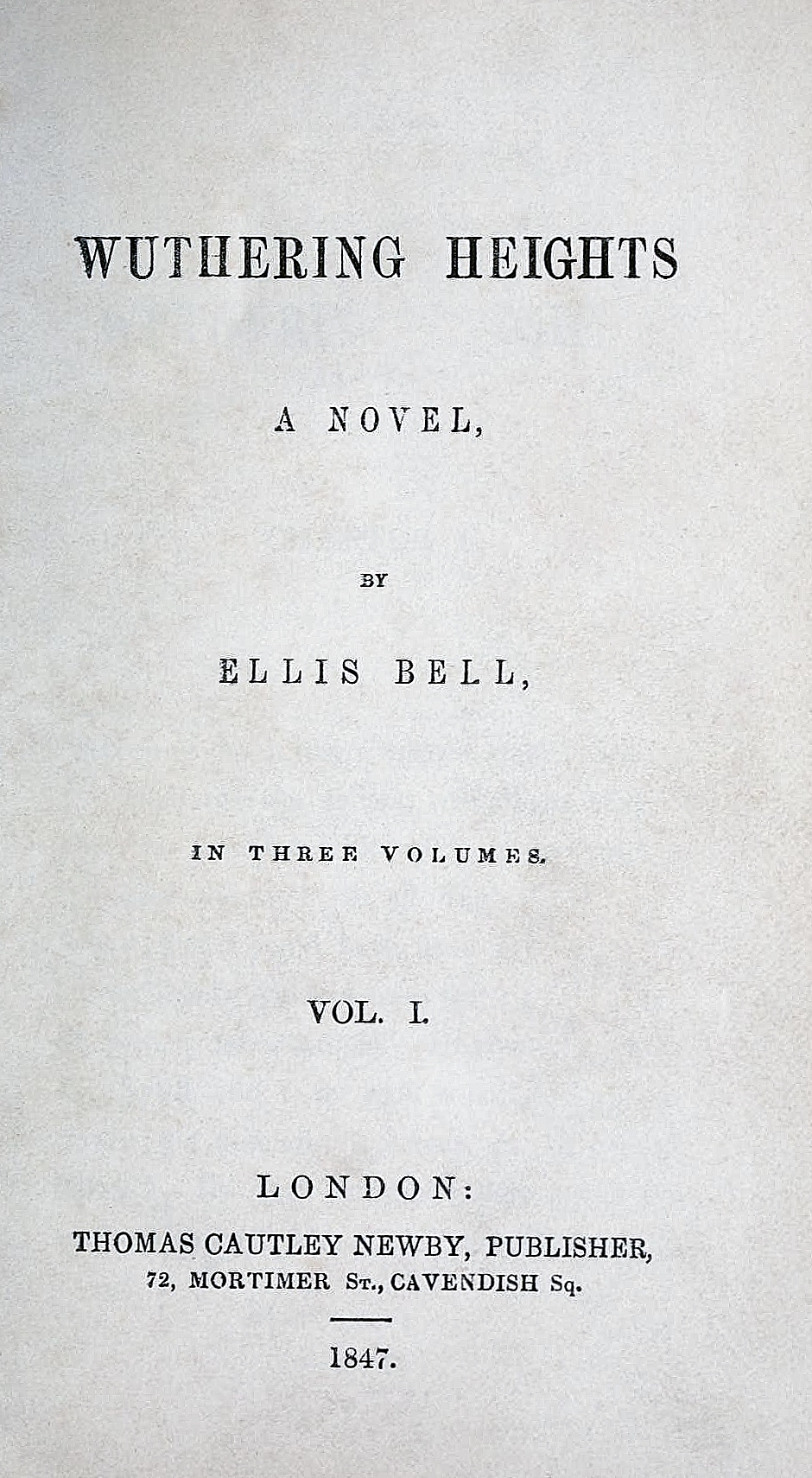
The form of the novel is as striking as its story. A visitor, Mr. Lockwood, learns much of the history through Nelly Dean, a housekeeper. Readers hear events through several levels of storytelling and have to decide how much they trust each account. These narrators have incomplete knowledge and personal interests. The result is more challenging than a straightforward chronological romance, and the younger characters become important to the story’s eventual resolution.
Reading note: The novel’s multiple narrators tell the story from their own perspectives. Their accounts need not be completely reliable.
Early reviews and a new reputation
Early reviews were mixed and sometimes hostile. Critics objected to the violence and cruelty of the characters, as well as the book’s bleak mood. It did not immediately occupy the place it holds today. Charlotte Brontë subsequently edited an edition of Wuthering Heights in 1850 and wrote material introducing her deceased sisters. Her perspective informed generations of readers, although later scholarship has questioned some of the impressions she conveyed.
Historical portraits of Emily
Few reliable contemporary likenesses of Emily survive. Her brother Branwell painted a portrait showing the three sisters, now held by the National Portrait Gallery in London. A separate portrait fragment has also been associated with Emily, although identification of surviving likenesses deserves care. These are historical painted likenesses, not photographs. The National Portrait Gallery’s collection record identifies the painter and sitters. Reuse of any particular digital photograph of an artwork still needs a license review.
The surviving paintings are a useful reminder that much of Emily’s modern image has been constructed after her death. Film publicity, book covers and imaginative illustrations may be evocative, but they cannot serve as documentary evidence of her appearance. Similarly, fictional treatments of her personality or relationships should not be presented as established biography.
Her final illness
Emily became seriously ill in 1848, the year her brother Branwell died. Historical accounts identify tuberculosis, commonly called consumption, as the cause of Emily’s death. She died in Haworth on December 19, 1848, aged 30, and was buried in the family vault at the village church. Anne Brontë died in 1849. Charlotte outlived them and became the principal public interpreter of their literary work.
The books and poems she left
Emily left behind one published novel and a substantial collection of poetry. There is no confirmed surviving second completed novel. Rumors of lost works have to be handled carefully, because an intriguing theory cannot substitute for evidence. Her known work already gives readers considerable material to study, particularly the relationship between the poems’ imagined voices and the layered narrative of Wuthering Heights.
Modern adaptations frequently emphasize the love story of Catherine and Heathcliff. That focus can obscure the novel’s violence, property disputes and second-generation characters. Someone reading the original after seeing a film may be surprised by how much of the plot comes through indirect narration. Its uncomfortable moral choices are central to the book, not incidental features to be removed.
Emily’s writing remains distinctive even among the Brontë sisters. Charlotte’s Jane Eyre and Anne’s novels explore different questions through different methods. Emily was not simply one member of a collective literary identity. Her single novel experiments with narrative reliability, generational conflict and emotional extremity in ways that continue to challenge readers.