

Prominent women in history changed laws, expanded scientific knowledge, challenged injustice and opened professions once closed to them. Their achievements crossed borders and centuries, from the abolition of slavery to the exploration of space. The women below did different kinds of work, but each left records that help explain what changed and how.
Harriet Tubman fought for freedom
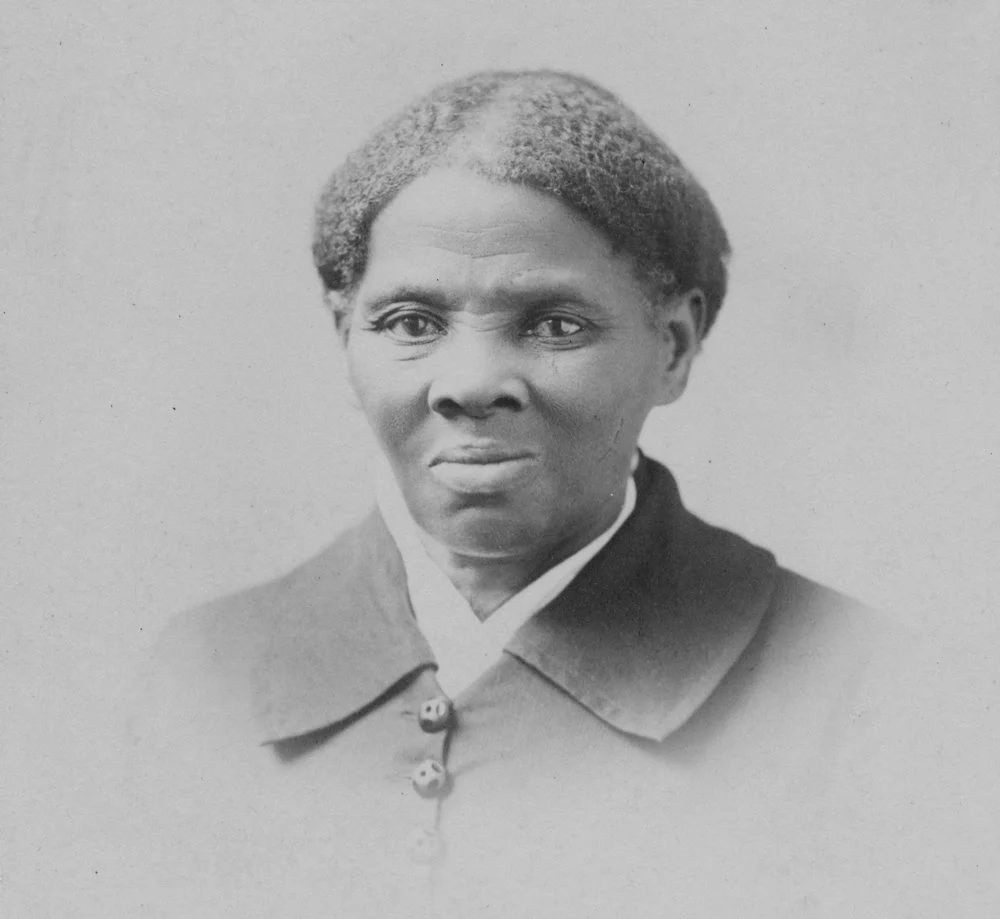
Harriet Tubman escaped enslavement in Maryland in 1849. She then returned to the South repeatedly to help other enslaved people reach freedom through a network of routes and supporters known as the Underground Railroad. These journeys were dangerous, particularly after Congress passed the Fugitive Slave Act of 1850.
Her work continued during the Civil War. Tubman served Union forces as a nurse, scout and intelligence gatherer and helped guide the Combahee River raid in South Carolina in 1863. After the war, she advocated for women’s voting rights and supported people in need in Auburn, New York. The US National Archives biography documents her work.
Sojourner Truth challenged exclusion
Born Isabella Baumfree in New York, Sojourner Truth escaped slavery in 1826 and became an abolitionist and women’s rights speaker. She used public speeches to challenge racial discrimination and the belief that women should not take part in political life.
Her 1851 speech at a women’s rights convention in Akron, Ohio, remains famous, although published versions vary and the exact wording is disputed. That difference matters: the record of what she did is stronger than some of the quotations later assigned to her.
Ida B. Wells investigated lynching
Ida B. Wells used journalism to confront racial violence in the United States. In the 1890s, she investigated lynchings, collected evidence and challenged false claims used to justify killings. Her pamphlets and the book A Red Record made a public case against that violence.
Wells also organized for voting rights, including the rights of Black women whose concerns were often ignored by the wider suffrage movement. Her work shows how reporting can combine documented facts with organized demands for political change.
Marie Curie changed the study of radioactivity
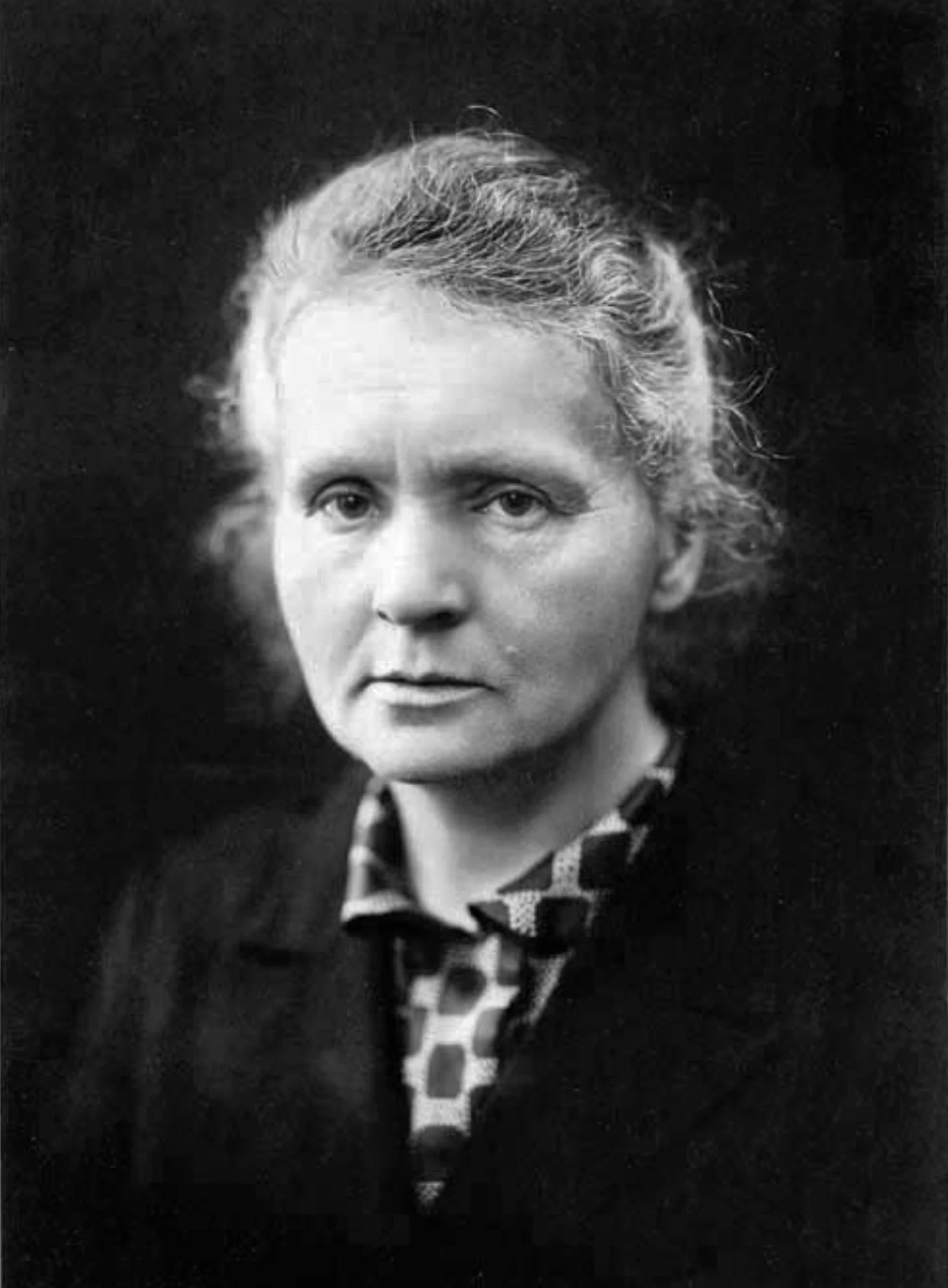
Physicist and chemist Marie Curie worked with Pierre Curie on research that helped establish the modern study of radioactivity. The couple identified polonium and radium in 1898, and she later developed methods of isolating radioactive substances.
Curie was the first woman awarded a Nobel Prize, sharing the 1903 physics prize. She received the chemistry prize in 1911, becoming the first person to win two Nobel Prizes. Her scientific contributions also carried serious personal risks because the effects of radiation exposure were not yet fully understood.
Ada Lovelace imagined a programmable machine
In the nineteenth century, mathematician Ada Lovelace studied Charles Babbage’s proposed Analytical Engine. Her published notes on the machine included a detailed procedure for calculating Bernoulli numbers, often described as an early computer program.
The Analytical Engine was not completed in her lifetime, so her work should not be confused with software that ran on a modern computer. Her importance lies partly in recognizing that a programmable machine might manipulate symbols and patterns as well as numbers.
Amelia Earhart broke aviation barriers
American pilot Amelia Earhart became the first woman to fly alone and nonstop across the Atlantic Ocean in May 1932. She flew a Lockheed Vega from Newfoundland and landed in Northern Ireland after a demanding flight through difficult weather.
Earhart promoted aviation and encouraged women to train as pilots. She disappeared with navigator Fred Noonan during an attempted flight around the world in 1937. Her final whereabouts have not been conclusively established, but her earlier flight records remain well documented by the Smithsonian’s National Air and Space Museum.
Katherine Johnson calculated paths into space
Katherine Johnson was a mathematician whose calculations helped US space missions. She joined the National Advisory Committee for Aeronautics, NASA’s predecessor, in 1953 and worked on flight trajectories and orbital mechanics.
NASA records explain how astronaut John Glenn requested that Johnson verify computer calculations for his 1962 orbital flight. Her contributions continued as American space exploration advanced, including work linked to Apollo missions. Her career also reveals the barriers faced by Black women working in American scientific institutions. NASA’s official biography provides details of her career.
Women who changed civic life
Political leadership and social reform also shaped women’s history. Elizabeth Cady Stanton helped organize the 1848 Seneca Falls convention, which made an influential public demand for women’s rights. Susan B. Anthony spent decades campaigning for suffrage, although the US constitutional amendment guaranteeing that voting rights could not be denied on the basis of sex was ratified after her death.
Outside the United States, figures such as Emmeline Pankhurst led campaigns for women’s votes in Britain. Their movements did not always agree on strategy or inclusion. Studying those differences makes the history more accurate than treating every campaign as a single unified effort.
How to compare historical achievements
These lives should not be ranked as though a scientific discovery, a rescue from slavery and a campaign for the vote were interchangeable. Each woman acted in the conditions of her time. Laws, education, wealth, race and access to institutions shaped what was possible and who received recognition.
Historical records also have limits. A famous quote may have been altered, a pioneer may have relied on colleagues whose names were overlooked, or a victory may have benefited some women before others. Museums, archives, original scientific publications and contemporary documents help readers separate a documented achievement from a simplified legend.